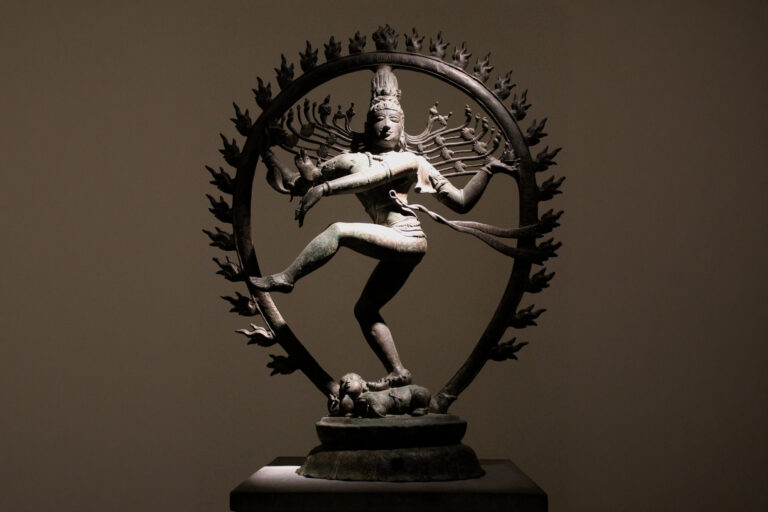


As a boutique investment firm, we believe stewardship begins with order at home. That is why we are invested alongside our clients, managing this combined capital with discipline and a long view.
In fact, this approach is built on a time-tested concept. In the South Indian state of Tamil Nadu, where we are rooted, traditions of prudence and intergenerational thinking have long shaped the creation and preservation of capital.
Poor Soil, Rich Enterprise
One of the best lessons in financial resilience emerged from Chettinad, a dry interior belt of southern Tamil Nadu. Here there are no perennial rivers or hills to trap rain. The region is dotted with gnarled palmyra palms, their roots probing deep into the cracked earth in search of water. This land promises anything but abundance. Perhaps that is why some communities like the Nāttukottai Chettiars1 were pushed to migrate.
It is a pattern that recurs across history and geography, giving birth to and propelling mercantile communities. For instance, a cycle of exiles over centuries pushed Jewish communities around the world to depend on trade, credit, and networks to survive and thrive.
Closer home, in the Marwar region of western India, famines punctured the lives of desert people. As a result, over two centuries ago, Marwari2 risk takers piled their suitcases and bags—and their traditional parta3 system of accounting—onto bullock carts, relocating to other Indian cities. They jumped over not just geographical hurdles but linguistic ones too, learning Bengali, Hindi, and far tougher South Indian languages, as they reinvented themselves as merchants.
In neighboring Gujarat’s Kutch district, arterial cracks on salt-crusted, barren landscapes spoke to the region’s water scarcity. Communities here unmoored from this desiccated land to the sea, becoming sailors and traders.
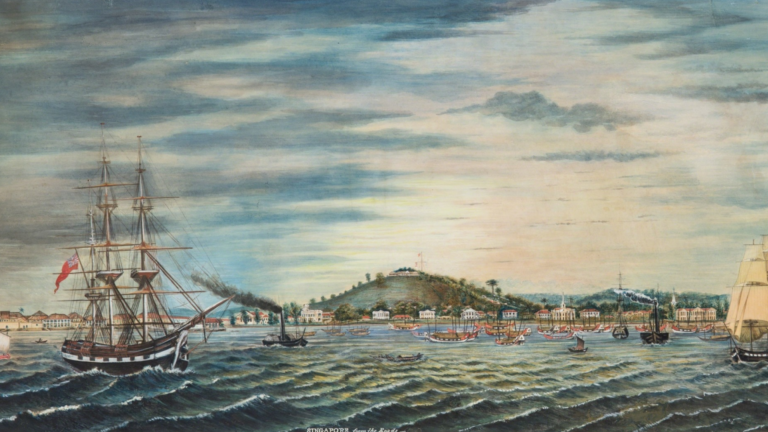
The Nāttukottai Chettiars4 too started off as seafaring merchants trading in salt and precious stones. From dusty towns like Kanadukathan, Kandanur, Karaikudi, Pallathur, and Thekkur in South India, young Chettiar men—pioneering practitioners of double-entry bookkeeping—set sail to Burma (now Myanmar), Ceylon (now Sri Lanka), Malaya (now Malaysia), Singapore, and Vietnam.
By the nineteenth century, they were financing Burmese rice paddies, Malayan rubber, and tin. British banks saw both opportunity and risk in such trades. The Chettiars stepped into this gap. They set up lending businesses that were essentially partnerships5 of closely related people, extracting relatively inexpensive British deposits. This structure minimized costs.
With an unparalleled ability to establish low-cost lending operations deep into previously unbanked territory, the Chettiars kept their collective noses to the ground to mitigate risk while enabling the British to participate, one level removed, in Myanmar’s frontier financing opportunities.
American anthropologist David Rudner, in his book Caste and Capitalism in Colonial India6, describes how the Chettiars built an indigenous banking system, over 200 years ago, spanning Southeast Asia. At the center of the Chettiar payments network was the hundi7, a promissory note that was the equivalent of today’s demand draft or banker’s check.
A creditor holding a hundi issued in a remote Tamil town or a large Indian city could carry it across an ocean and walk into a Chettiar firm in Rangoon, now Yangon in Myanmar, to collect their money on demand from strangers.
It worked because every Chettiar firm was connected and accounts were reconciled daily. Firms never borrowed more than twice what they owned, keeping a disciplined 2x leverage cap. Timely interest and principal payments to depositors were always prioritized and even enforced at the community level.
If a Chettiar firm failed to honor a hundi obligation on its due date, the kittangi8 or community clearing center at the local Chettiar temple, would make good on the payment. News of the default, however, ricocheted through other Chettiar firms across ports, from Madras to Mandalay to Malacca.
Not honoring a hundi was not an option. Depending on the nature of default and the size of the defaulting firm, there were a range of sanctions: from penalties and formal notices to expulsion from the community kittangi altogether. This network enforced honesty as the only rational choice.
This also explains why the local Chettiar temple served as the financial nerve center for Chettiar banks. It was here that key decisions, such as interest rates and the impact of prevailing business and political conditions on Chettiar money supply, were made.
The Chettiars understood that lasting wealth is built not just on sharp instincts, but on the trust of people placing money in their hands. That trust was reinforced through the twin forces of fear and devotion9 to the Indian gods Siva and his son Murugan.
Every Chettiar firm ran on the same simple math10: for every hundred rupees of capital, about two-thirds was the proprietors’ own money. A part of the remaining came from relatives (usually mothers, sisters and wives—the achis of the community). Another fraction came from outside investors including British banks. Finally, the smallest portion was contributed by the local Chettiar temple.
Every month, Chettiar firms were obligated to pay interest on the community temple’s deposits, but only after having paid all interest dues to every other source of capital. This was a tactical move to drive home the point that any non-payment was not only a default on a promise to man but also to God. However, this discipline gradually withered, perhaps due to the complacency that usually follows heady success.
By the 1920s, many Chettiar banks11 were borrowing far more than their own capital, breaking the traditional 2x leverage ceiling. Instead of reducing business or even vacating the market in the face of a weakening political and business climate, Chettiar firms started relying on the primacy of collateral-backed advances. It was a deviation from the long-held belief that loans should be extended based on a client’s character, cash flow, and collateral, in that order.
Meanwhile, Burma was transformed into the rice capital of the world by the protective umbrella colonialism provided its chosen financiers, the opening of the Suez Canal in 1869, and Chettiar financing.
But that prosperity unraveled after the global economic collapse of 1929 triggered the Great Depression12, weakening rice exports and sending loan defaults soaring. The Chettiars possessed land as collateral, but it couldn’t be readily turned into cash. Without liquidity, their lending business morphed into land ownership.
Coming out of the Great Depression, Chettiar firms owned between 25-50% of all Burmese arable land13. This set the stage for what followed: a decade of growing profits and political unease, the inevitable fall of colonial rule, the advent of self-rule and thereafter, dictatorship, and finally the ensuing expulsion of this once-powerful mercantile minority from Myanmar.
This backstory has powerful long-term lessons: Trust matters. Discipline matters. Greed kills, eventually.
Invest Long, Spend Thrift
Client protection is the springboard for everything we do. Our investors are families and institutions that have spent years laboring to build or consolidate wealth. Their faith is what enables our investments.
For instance, before we decide to buy the shares of any company, we spend time on the ground, understanding the business, its culture14 and the people running it. Our portfolio is focused because owning a smaller number of companies we truly understand gives us conviction.
When we find businesses we believe are built to last, we buy them and stay invested. Our philosophy15 is simple: the longer capital remains invested in great and growing businesses, the harder it works as today’s returns become tomorrow’s principal, producing further gains, and setting off a snowballing chain reaction.
That same discipline steers how and what we spend.
For us cost control isn’t a budgeting exercise. The question we ask is never “is this within budget?” It is “does this need to exist?” Every dollar we spend must be traceable back to a reason. If it can’t be justified by the person who authorised it, it gets trimmed or cut entirely. Even so, we are watchdogs, not bloodhounds. A watchdog is alert to what matters. A bloodhound, on the other hand, is disruptive, chasing a scent until it loses the forest for the trail.
We prefer clean, functional offices over prime business addresses. We avoid unnecessary depreciating asset purchases, often opting instead for substitutes that might hold value or appreciate. But our investment in people is substantial. Good people are hired carefully, given room to do their best work, and rewarded in ways that encourage a long-term ownership mindset.
In addition, cost discipline survives in our organization beyond any one person through structure. We encourage deep specialisation, in treasury, tax and financial reporting, until the technical becomes instinctive.
We also eliminate single points of failure. No decision of consequence rests with just one person. It’s the maker-checker concept in practice where every reconciliation, every wire, every expense made by someone is checked and signed off by another person. In this way, we build our processes to catch the small things early, and keep questioning them every time.
One of the strongest proponents of this approach was Thomas Sawyer Murphy16, the American media executive known for his stubborn focus on efficiency.
In 1986, Murphy17 led the acquisition by Capital Cities Communications of the American Broadcasting Company (ABC), a major U.S. television network. He slashed corporate excess and slid every dollar spent under an annual budgeting microscope but granted greater autonomy for on-the-ground decision making.
Murphy’s approach shows that there’s a simple boundary between what you can influence and what you cannot. As he said, “One of the most uncommon things in life is common sense.” Markets could rocket or crater. Economies could hit a speed bump. We cannot control any of that. But common sense tells us that our own costs are levers we can pull.
Philosophy Meets Finance
Nearly 2,000 years ago, Thiruvalluvar, the Tamil poet-philosopher, composed the Thirukkural18. Thiru means sacred in Tamil and Kural translates to short verse. It is a compilation of 1,330 couplets of two lines each and just seven words in total. That’s briefer than even the three-lined Japanese poetic form, haiku.
The Thirukkural comprises three parts: Aram (virtue), Porul (wealth), and Inbam (love). A kind of rulebook for life. The 754th couplet appeals to us:
அறன்ஈனும் இன்பமும் ஈனும் திறனறிந்து
தீதின்றி வந்த பொருள்
Wealth gained with proper knowledge and without foul play yields both virtue and joy.
The verse points to a simple idea: wealth lasts when it is created with judgment, discipline, and integrity.
This philosophy shapes not just how we invest but also how we have built our own business. Our approach to stewardship starts with a strong financial foundation stacked on three lines of defense.
The first is our investment management income, or what we earn from managing client capital. It is our core income, and it moves in line with our performance and the markets.
When asset values rise, income goes up. When they fall, income comes down. We accept that, but don’t rely on it alone. That would mean our ability to think clearly depends on what markets do, and it’s not a position we want to be in.
One company’s story brings this point to life.
In 1991, former government official and banker Dhruba Narayan Ghosh founded Investment Information and Credit Rating Agency of India Limited, later renamed ICRA Limited. In the early days, credit ratings didn’t rake in much money. So, the company kept a tight grip on costs with a lean team of analysts and few fixed assets.
Ghosh’s mantra19 was “never be in loss.” Staying true to it, ICRA posted a profit in its very first year, thanks to something as mundane as interest earned on bank fixed deposits.
Soon the company’s revenues and profits from its ratings business began to surge, powered by a tailwind of corporate debt issuance. But Ghosh began to worry about the pressure on ICRA’s integrity from the mounting competition in its ratings business.
American business journalist Michael Lewis captured this clash accurately in his 2010 bestseller The Big Short20. In 2015, it was adapted into an Oscar-winning movie of the same name. The film shows how risky home-loan speculations stoked the global financial crisis in 2008. One of the key reasons was the conflict of interest created by unscrupulous debt issuers paying off credit rating agencies for their ratings. This led to overly favorable assessments of risky investments.
To guard against such practices, ICRA’s Ghosh pushed his board of directors to build a steady and substantial non-ratings income stream as a buffer to his ratings business, in order to be “never compromising, despite acute competitive pressures on ethics.” This ethical focus was what he saw as the company’s “true capital.” 21
At Pāri Washington, we follow the same idea for our second line of defense: making the firm’s own cash work as hard as possible by generating interest, and other similar steady streams of passive income.
Here again, we focus on optimizing yield subject to quality and liquidity. We deliberately seek to deploy our surplus cash in opportunities that enhance returns without compromising our flexibility and quality discipline.
Liquidity signals how quickly we can access our money when we need it. But it is only as valuable as the judgment behind it. Holding cash means nothing without the conviction to deploy it.
What ties yield and liquidity together is quality. Therefore, we invest only in what we understand well enough to explain simply and stand behind without hesitation as the flow of passive income can be derailed by risks you cannot describe clearly.
Our third line of defense is returns from our own assets: A significant portion of our own capital stays invested in our fund, just like that of clients. So, we are not just managing other people’s money, we ourselves are an investor, compounding alongside our clients.
The second and third pillars matter immensely because they are more insulated from external dependencies.
The goal is a steady, self-generated stream of income and unrealized gains that cover the long-term costs of building our firm. When that happens, we can stay invested through cycles and let compounding do its work.
“We Eat Our Own Cooking”
Our desire to invest alongside our clients and subject our capital to the same risks and returns that our clients face is not a new or unique idea. It’s the approach that legendary investor Warren Buffett propounds in Berkshire Hathaway’s Owner’s Manual22.
“In line with Berkshire’s owner-orientation, most of our directors have a major portion of their net worth invested in the company. We eat our own cooking. We want to make money only when our partners do.”
This is what skin in the game is. When our fund does poorly and our clients’ assets are affected, Pāri Washington is singularly and heavily impacted too. That said, when the fund does well and our clients prosper, so do we.
The design is to endure as we grow, preserving our cost discipline, our three lines of defense, while growing our capital invested alongside our clients.
Our reporting too leaves no space for ambiguity. We believe clarity isn’t a luxury but the foundation and it starts with looking at the right number.
Contrary to conventional practice, we have always reported Net Asset Value (NAV), the per-unit value of investments, after accounting not just for fees and expenses but also for taxes and tax provisions. In effect, we deduct the tax investors will eventually owe before reporting their returns. If the statement says INR 10 million, that is what clients receive if they choose to access it. What you see is what you get.
Endurance By Design
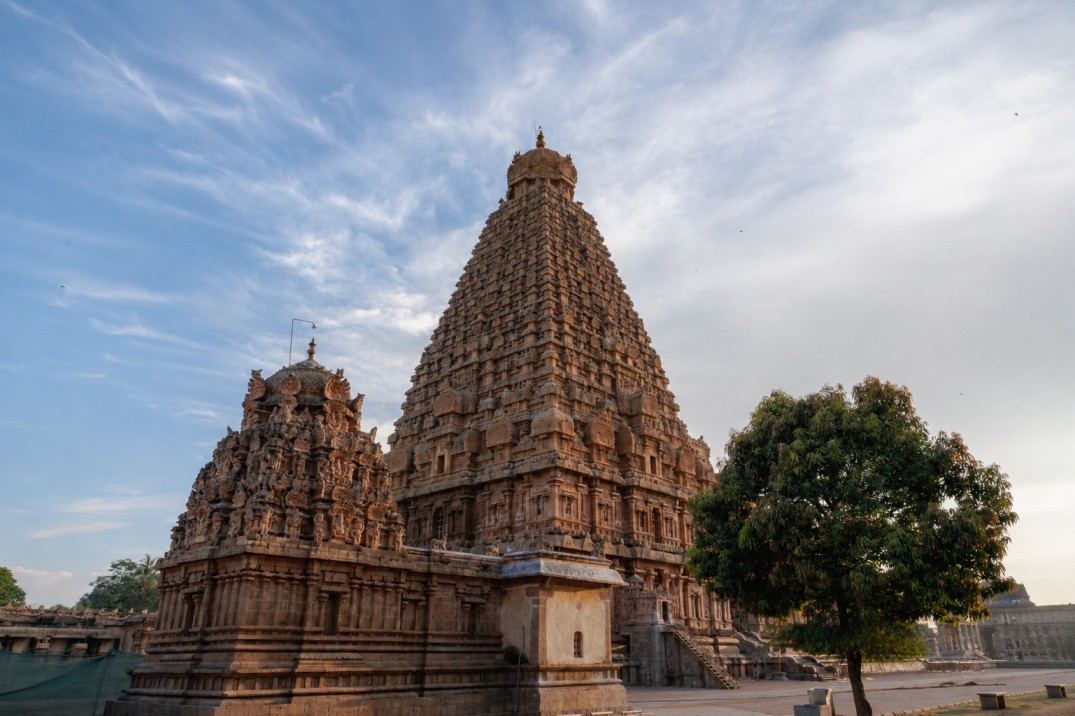
Over a thousand years ago, long before Europe’s soaring monuments, Emperor Rajaraja Chola I23 laid a foundation to build a colossal temple in South India.
Within a decade, Rajarajesvaram, later the Peruvudaiyar Kovil or the Brihadisvara Temple24—dedicated to Siva and literally meaning “the Temple of the Great Lord,” but known locally as simply, the Big Temple—rose 216 feet into the sky.
On the fertile plains of the Cauvery Delta, Rajaraja Chola commissioned a vimanam or tower over the sanctum of the principal deity. His Big Temple was built using an estimated 130,000 metric tons of granite25.
Unlike ancient solid structures that are comparatively simpler to construct, the Big Temple’s 216-foot vimanam is hollow within, enabling priests and devotees to perform religious rituals. It’s an engineering marvel, built using interlocking granite blocks. In 1010 CE, no similar structure stood taller. None even came close.
Yet, this temple’s achievement was not just its size, but also the organization required to build it. Thousands of sculptors, engineers, artisans, and laborers toiled for years in the sultry tropical heat as granite was ferried across rivers and canal systems from distant quarries.
This unprecedented mobilization of resources, and the logistical and organizational brilliance that made the temple possible, also enabled Rajaraja Chola to wage his wars efficiently. The wealth flowing in from his conquests was channeled back into the kingdom’s heartland through this temple complex.
In many ways, the temple precincts26 functioned much like the Vatican, centuries before the seat of the Catholic Church came to be, bringing together wealth, patronage, and public life under one roof.
But Rajaraja Chola’s crowning innovation came after the last stone was laid.
To ensure the temple would outlive him, he had the details of an endowment model inscribed27 on its walls to keep its rituals alive for generations. For a single lamp to burn in perpetuity, he accounted for—and funded—everything: the wick, the ghee, the cotton, the cows that produced the milk, the land that sustained them, and the people who tended them. Every task supported a livelihood. The temple was not simply built; it was designed to endure.
In 2010, the Big Temple celebrated its millennial anniversary. Today, it is a UNESCO World Heritage Site, recognized as a great cultural treasure. The Chola palaces, luxury residences with no public role or purpose, have disappeared, but the Big Temple still lives. Its rituals continue and devotees gather daily, and for festivals.
We think about our firm the same way because endurance—and purpose—must be intentional. The real question is not how we perform in a good year, but how long our firm and our purpose can survive if every external source of revenue disappeared tomorrow. We call this our “years-alive” ratio.
Our quest and our answer is not a number. It is perpetuity.