

In a four-acre orchard1 in central India, twenty German Shepherds patrol the leafy perimeter, CCTV cameras spy on the grove and guards punch in and out on rotating shifts. The security is fortress tight, fit for stacks of smuggled gold bricks. The sort that inspires rooftop leaps and screeching tyres.
So, what sits behind all of this?
Mangoes. Now, this is not any mango, but the Miyazaki2: a prized Japanese variety. In the annual mango market, these are luxury goods: one that command value not just for taste, but for rarity and reputation.
A Summer Cycle
Every summer, as beads of sweat boil over eyebrows and nose tips, the sight of raw mangoes cools moods. It sets off a swirl of remembrance across the subcontinent. The summer blaze coaxes green buds to wriggle through the foliage in orchards and neighborhood trees, more abundantly in India than almost anywhere else in the world. In a sense, the mango season can be seen as echoing a mandala3.
A mandala is an intricate, symmetrical pattern rooted in Buddhism. It is often created on the ground using colored sand, rice flour, or flower petals. Monks and nuns in Buddhist monasteries begin at the center, carefully placing the first dot. Then pinches of dyed sand or rice flour are allowed to slide between loosened fingers to curl intricate patterns.
Once the mandala is complete, monks or nuns run a soft brush over it or gather it by hand. Colors smudge and the motif is ruffled as deliberately as it was made. This act forms part of a cycle that must restart.
The mango season has a similar temperament. It begins with a spray of blooms, so small it seems almost uncanny that these ephemeral, delicate flowers swell into heavy, chandelier-like fruit clusters. As the season peaks, neighborhood fruit hawkers start pedaling through streets earlier in the day to beat the sizzling heat. Around the streets of the South Indian city of Chennai, their crackling recorded call is embellished with “mambazham,” mango in Tamil, drawn out and snapped into an “oye!” to heckle locals into attention.
The ploy clicks. Residents pop out like meerkats. Windows and gates fly open and buyers wave the cart vendor over, inevitably following the script of bargaining for an extra fruit or a lower price. Soon, homes throb with the floral, citrusy scent of mangoes ripening in rice drums or hay-lined crates.
The season itself is a procession of oval, round, heart-shaped, kidney-shaped, or slender fruits. Each variety toots its own sweetness, tartness, aroma, and shade of yellow, green, or in some cases even red and purple. For many of us, it is a whirr back to grainy childhood memories of sultry summer afternoons, school holidays, cousins under one roof, and the ritual feast of mangoes.
A ripe mango, small enough to sit in the palm, invites juice-down-the-chin abandon. Connoisseurs simply rinse it and gnaw through it, no knife involved. It’s a gloriously messy act: nectar trickling down the wrists and fingers gummy with pulp. Its presence lingers in skin-tightening stickiness at the corners of the mouth and saffron blotches on clothes.
From Flower to Fruit
The tiny, pale white flowers of mangoes accordion between December and March, depending on the intensity of the winter. A sharper cold delays them; a blunter one brings them early.
The faint, musky scent of these flowers attracts mostly ants and fruit bats. Pollen from male flowers sticks to the insect’s hairy body and mouth. It gets transferred to a female flower at the critter’s next stop.
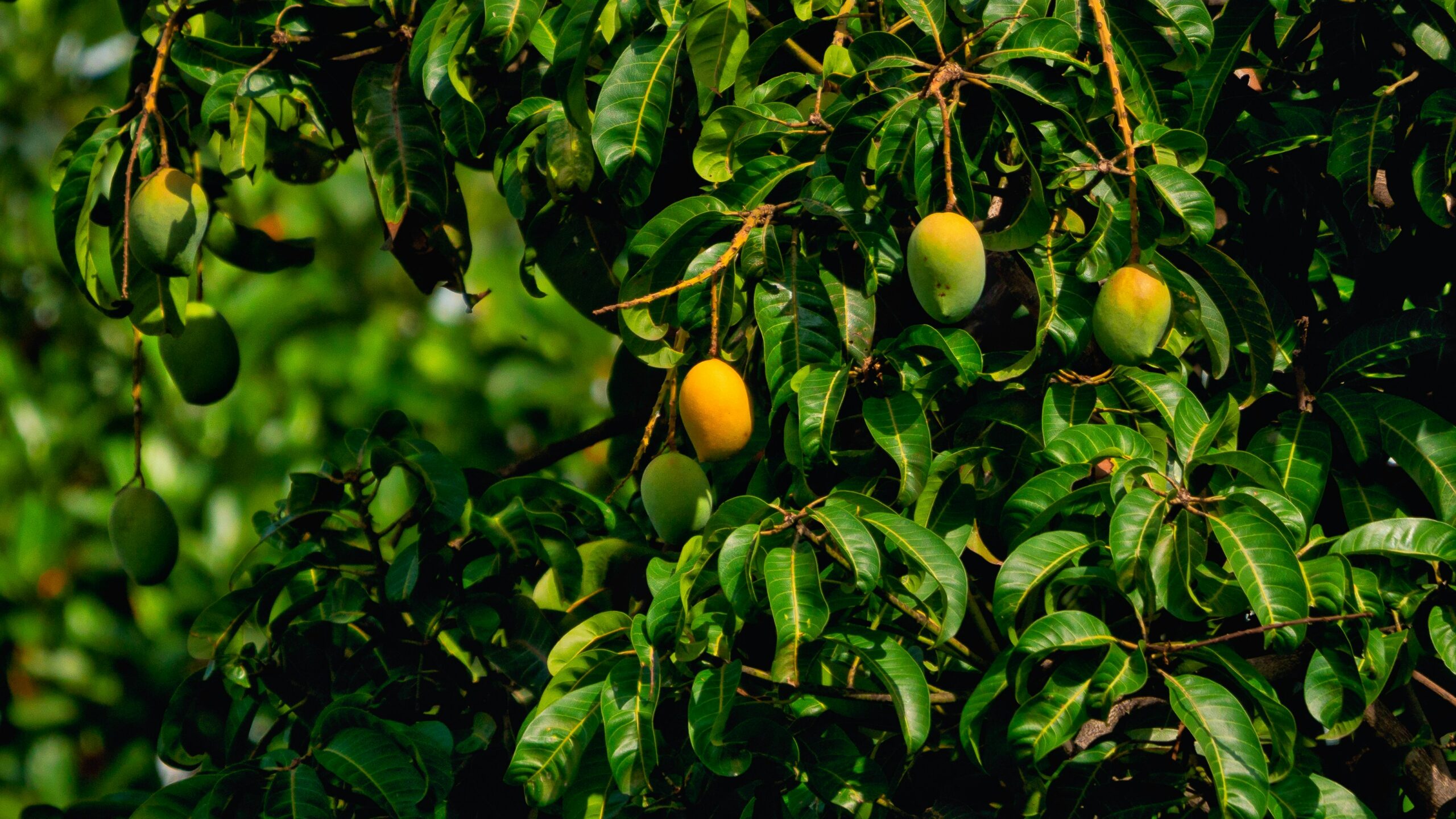
Two to four weeks later, the haze of small, star-shaped flowers breaks into olive-like fruitlets that gradually blot into yellow while ballooning in size.
Curtains for the season first go up in South India, led these days by the rich, honeyed Aapus or Alphonso and the firm, generous Banganapalli. The triumphal parade includes the custardy Imam Pasand, the tangy Malgoa, and the rounded Rumani. It feels less like a single fruit arriving and more like a riot of a family gathering.
The season then moves northward, bringing the fragrant Dasheri, the earthy Langra, the pale Safeda, and the intensely sweet Chausa. But this is just the doorway. Summer floods South and Southeast Asia with over a thousand mango varieties. It’s a number that short-circuits the mind.
Across Indian cities, mango trees spilling over compound walls turn into zones of upward attention. Passersby pause, spotting mango clusters. This is followed by a mental assessment of which fruits might yield to an outstretched hand and which demand more inventive means: a catapult, perhaps, or a long bamboo pole tipped with a sickle.
Mango tree owners turn hawk-eyed, guarding fruits that dangle beyond their gates. The slightest rustle of leaves sends them scooting to the window, parting the curtains just enough for a one-eyed detective scan of urban “foragers.”
Soon WhatsApp messages urge people with “Stock available, delivery today” messages. Batches of the fruit are ferried across towns and cities after payments chime in. The mangoes are packed tight into cardboard boxes, cushioned with crinkled paper. Larger lots are wedged into hay-lined wooden crates. From there, they are heaped onto trucks or three-wheeler vans and sped to the nearest train station. The checkered flag is waved for the annual mango rush.
Ripening to Sweetness
Even after it is plucked, a mango continues to throb. Often, when it arrives in boxes or sacks, it is green, sour and hard. Over the next few days, it undergoes an explosive chemical transformation.
So, there’s a plant hormone called ethylene4. It’s a simple hydrocarbon gas (C₂H₄) produced by the fruit itself during ripening. Now this organic chemical surfs through the mango, instructing enzymes to break down the tough, starchy flesh into sugars. As the cell walls soften, the skin ripens into yellow or red, or even a paler shade of green.
This happens because ethylene triggers the release of more ethylene, a cascading process that speeds both ripening and eventual spoilage. That’s why mangoes ripen faster in boxes of hay or paper. This isn’t inherited kitchen lore but actual plant science. The gas gets trapped, keeping the environment cozy, and the fruits ripen in their own little atmosphere.
Once ripe, it’s time for mango diplomacy. A mango placed between two people almost immediately turns into a tiny inheritance dispute. It is usually sliced into two fleshy cups on either side and a flatter, flesh-clinging seed in the middle. Older siblings usually claim a bigger chunk of meatier cheeks. The younger ones resign themselves to the seed.
True connoisseurs relish even the skin, scraping it close, tasting the faint bitterness beneath the sweetness. Still others grate the seed clean to a pale husk like squirrels.
At some point, every conversation about mangoes tips into an argument: half debate, half telemarketing spiel. Some will insist the Alphonso remains unmatched; others will counter that the less celebrated kinds carry unique subtleties. These debates aren’t meant to be settled, merely meant to be worn devotedly like jerseys with your favorite players’ names.
Flipping the Pages
The mango’s scientific name, Mangifera indica, carries clues to its origins. Indica is Latin for “of India,” pointing to the subcontinent where the fruit has been cultivated for over 4,000 years. In fact, mangoes are related to cashews and pistachios. These trees too have tiny, fingernail-sized, clustered flowers forming a fruit that guards a single hard seed inside.
Fossil evidence5 suggests mangoes may have first appeared 25 million years ago across parts of Northeast India, Myanmar, and Bangladesh. The oldest-known mango fossil is a leaf preserved in black shale that was discovered in a coal mine in Assam, in India’s northeastern floodplains.
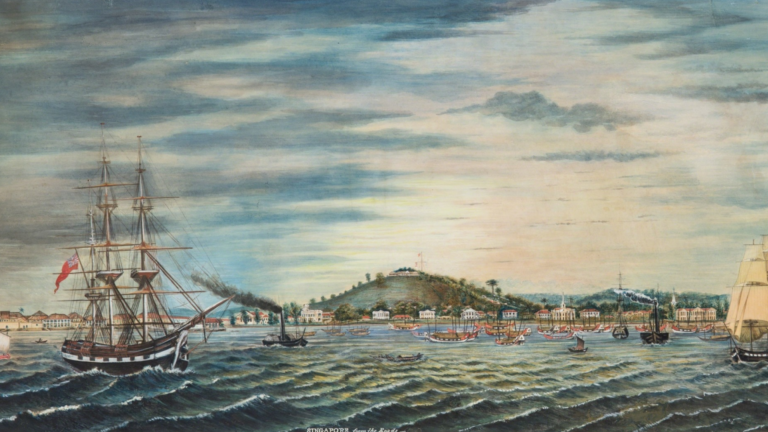
In the late 15th century, the Portuguese6 arrived in India, becoming the first Europeans to establish a direct sea route to the subcontinent by sailing around Africa. They were part of a broader wave of European kingdoms trying to reach Asia while bypassing the long, expensive land routes controlled by West-Asian and Mediterranean traders.
They came in search of spices and direct trade, bobbing on high-sided wooden ships built for marathon ocean voyages. After sailing out of Europe down the Atlantic coast of West Africa, the ships swung around the Cape of Good Hope on the southern tip of the continent. They then crossed the Arabian Sea, tailing monsoon winds on their way to India.
Finally, the Portuguese landed along the Malabar and Coromandel coasts, regions where Malayalam and Tamil are spoken. When they first encountered a mango, they learned its name as mangai, the Tamil word for a raw mango. That word travelled. Mangai became manga in Portuguese, and eventually “mango” in English.
One thing the Portuguese helped popularize was mango grafting. We’ll get into the nitty-gritties of that in a bit. But first, a botany detour.
Most of us assume that if a mango tastes a certain way, planting its seed should give you the same mango tree. That’s not how it works.
When pollen from the male flower of one tree reaches the female flower of another, a seed is formed and the mother tree wraps it with its signature flesh. Since this exchange could also happen between different mango varieties, seeds end up carrying a fresh genetic mix. This means the next tree can turn out quite different from its parent. It’s a constant reinvention.
Now, there is a way around this unpredictability: grafting7. This means farmers do not have to leave the character of a mango to chance.
Instead of relying on seeds alone, growers use grafting. They attach a cutting, or scion, from a tree known for a variety like Alphonso or Banganapalli to a young mango plant called the rootstock. The two cut surfaces are tightly aligned and bound together. Now a thin layer of living tissue beneath the bark, known as the cambium, begins to heal and fuse.
New vascular channels form, allowing water, nutrients, and chemical signals to flow between the two parts as a single plant. The rootstock provides the roots and hardiness, while the scion preserves the fruit’s genetic identity. This ensures that the tree produces the same kind of mango year after year.
Once the same fruit was reproduced reliably, growers began to select, name and standardize varieties. This has resulted in a rich portfolio of nearly 1,500 mango varieties8.
In fact, a great business is a bit like a mango sapling planted in rich red soil and cared for patiently. Over time, it extends branch by branch, flowering and fruiting, offering sweetness, shade and compounding returns for decades to come.
On the Table
From April to June, mangoes headline menus and meals. The seasonal delicacy is chopped, boiled, sautéed or pulped in raw or ripe form across Indian kitchens, restaurants and street stalls. The fruit’s true beauty lies in its ability to crescendo through both sweet and savory dishes.
In western and northern India, aamras is a luscious dessert masquerading as a meal with entire lunches being organized around it. Aamras is created by adding white streaks of milk to mango pulp. The silky mixture is speckled with cardamom and pigmented with saffron. Then refrigerator shelves are rearranged and leftovers pushed aside to make space for hulking aamras containers.
Usually, this cold lava is paired with puris puffed from a dunk in blistering oil. Such breakfasts evoke a festive zeal of sorts. The miniature balloons are punctured with jittery fingers battling hot bursts of steam. The puris are then dipped into bowls of this molten mango. Every bite is greedily followed by another spoonful of this indigenous smoothie.
Even when huge amounts of aamras are made, it runs out alarmingly fast. Somehow, the last spoonful of aamras is always accompanied by ritual protests of “No, no, you take it,” spoken by people who desperately want it themselves.
Amrakhand9is a thicker plot. Hung curd is folded into mango pulp. The fruit’s deep orange loosens the heavy curd and cardamom or nutmeg sharpens the sweetness. This creates something denser than yogurt but softer than ice cream.
Here the season is also greeted with raw mango beverages. Aam panna10 is a tangy drink made from boiled green mangoes blended with mint, cumin and black salt.
In the South Indian state of Kerala, mango adds a completely different punctuation to meals. Mampazha pulissery11 mixes ripe mangoes with yogurt and a coconut gravy that is sweet, sour and gently spiced. This is often eaten with piping hot red rice glossed with melted ghee and a blistered papadum on the side.
Along the coasts, raw mango is paired with prawns and fish to add seasonal tartness to coconut gravies. These taste even better the following day, after the fruit has melted into the sauce.
Tamil homes mark the new year with manga pachadi12, where raw mango, jaggery, neem flowers, chili and salt are sautéed together. The jammy dish signals life in miniature: sweetness, bitterness, heat and sharpness in a spoonful.
Another dish, mukkani payasam13, triples down on sugariness. Mukkani is the Tamil word for the three classical fruits: maa, palaa and vazhai, or mango, jackfruit and banana. This velvety dessert blends the trio into a smooth puree with coconut milk or regular milk. Much of the body and heft comes from the banana and jackfruit. It gives the payasam a thickness and pale-yellow hue almost like creamy pumpkin soup. The mango cuts through with its own syrupiness and tang.
But no two homes make the payasam alike. Some use coconut milk, some cow’s milk. Some use jaggery, while others rely only the sweetness of the ripe fruits alone. Powdered cardamom infuses it with a spicy warmth. And every batch shifts with the season’s mangoes or bananas at hand.
Elsewhere in the South, raw mangoes drift into lentil-based sambars and clear soup-like rasams.
Alongside these dishes, mangoes also usher in pickle season. The smallest raw mangoes, barely larger than grapes, are tossed whole with a paste of mustard seeds, turmeric, salt and chili. In this mavadu pickle, salt leaches moisture from the tiny raw mangoes, producing a puckering brine that the shriveled fruit drowns in.
When the lunch table runs short of a dish, larger raw mangoes are quickly diced and scorched with a sizzling chili oil. It’s pickle-in-a-flash. The condiment’s sharp bite and vermillion oil punches through creamy curd rice.
Then there are the marathon pickles that rely on the alchemy of time and sun. For this, raw mangoes are cut into big pieces with a bit of the hard seed coat still clinging on. The mango pieces sit in a spicy slurry for weeks. During that time, the heat and oil seep into the raw flesh, slowly softening it.
“Hell of a Fruit”
For many Indians abroad, mangoes carry echoes of a long-gone summer. Mangoes from the subcontinent are somehow sweeter, softer and less fibrous than the Caribbean and Latin American varieties stacked in North American supermarkets.
Indian mangoes returned to the American market only in 2007 through a trade agreement that also opened the South-Asian nation’s doors to Harley-Davidson bikes.
This milestone was achieved only through the then US President George W. Bush’s India visit a year earlier where he happened to taste an Alphonso mango. “A hell of a fruit,” he exclaimed, according to several headlines14. Soon after came the breakthrough Indian exporters had waited nearly twenty years for.
Still, even today, less than 1% of India’s mango crop15 leaves the country. Which is why, every summer, the fruit arrives abroad with the emotional force of contraband that briefly satisfies a craving bordering on addiction.
Pre-orders on WhatsApp “mango alerts” sell out before the first shipment even leaves India. Some mango lovers spend close to USD 1,00016 for weekly deliveries through the season. Nostalgia overpowers reasoning to make it feel like a small price to return.
Beyond the Plate
The devotion inspired by mangoes spills beyond the kitchen, finding expression in literature, clothing and jewelry.
For instance, in ancient Tamil Sangam poems17, the mango tree appears in the mullai landscape. It is a cultural cue for pastoral, forested tracts. Sangam literature is among the oldest and most inspiring bodies of Tamil writing, with roots stretching back more than 2,000 years. It is a collection of classical Tamil poems composed by poets belonging to a literary academy of yore, the Sangam.
This trove of writing is remarkably secular in character, focusing less on gods and myth and more on lived human experience like love, separation and the rhythms of everyday life.
That same sensibility is reflected in the way nature is observed and felt. The diverse group of Sangam artists and performers, for instance, shared a deep connection to the mango tree. Its flowering signaled an approaching reunion. A cuckoo calling from its branches carried a note of longing. At the same time, the mango tree’s floral fragrance could turn suffocating in a lover’s absence.
Over time, the mango’s curved form, rounded at one end and tapering at the other, may have been stylized into the paisley motif18. It curled through pleated silk saris, along gold-threaded borders brushing the ankles and across pallus draped over the shoulder. Repeated, mirrored and nested within itself, the paisley swirl sometimes seemed infinitely looped.
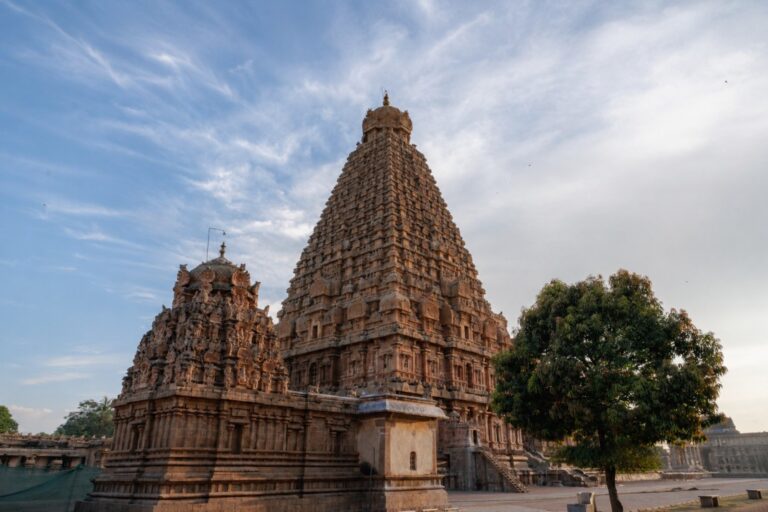
In ornaments made for the idols of Hindu deities, the design was recast in gold and dimpled with ruby-red and emerald-green stones. Over time, these temple-jewelry19 designs were gleefully borrowed by classical dancers and brides. Bell-shaped jimikis swayed from the ears, while pendants and chains of manga malai, a string of tiny gold paisleys, layered the neck. You’d also find them glinting from the center of tightly wound hair buns and jasmine-snaked braids. The fruit inspired an entire language of eye-popping design, outliving the mango season.
No Price Too High
Still, the fruit itself continues to evolve. New mango varieties keep emerging, while others return to the subcontinent transformed by the places they’ve traveled through.
One such example is the Miyazaki mango20.
Centuries ago, mangoes likely moved eastward from South Asia to Japan along trade routes or with traveling Buddhist monks. But the Miyazaki mango itself emerged much later, taking shape around the 1980s on one of Japan’s southernmost islands.
These mangoes are rooted in fertile, ash-rich soil, set against blackened volcanic slopes and a teal-blue Pacific coast. Farmers usually prune flowers and remove a majority of the buds, so the tree can focus all its energy on just a few fruits. The top grade, labeled Taiyō no Tamago, Japanese for“Egg of the Sun,” is carefully cultivated inside greenhouses. Here the warmth slowly paints the fruit into a cherry red or lilac tint. These eye candies are treated as luxury gifts, sometimes costing thousands of dollars for a pair.
This is why the Miyazaki mango grove in central India was being guarded with Bond-style security reserved for rare diamonds. It’s a heftily priced fruit.
Meanwhile, in Andhra Pradesh, a farmer who spent over a decade cross-pollinating different varieties has developed a mango that can withstand freezing temperatures21 for months.
This variant’s skin peels back easily like a banana’s, revealing a soft pulp whose sweet-sour balance remains intact even after cold storage. If you slip a lolly stick into it and freeze it, it can be licked and slurped like a popsicle.
For those dismayed by mango season’s curtain call, this frozen avatar lingers on, buying everyone a little more sweetness till next year.