

Success is a mask. Crisis, though? It’s truth serum. On a good day, people are all smiles: firm handshakes, high fives, the whole thing. But when things go wrong? The smile tightens. Color drains from the face. And suddenly the truth is visible.
Companies are no different. You cannot sieve out corporate culture from bumper quarterly earnings reports. You confront it when the numbers miss, or when a regulator’s letter lands on the boardroom table. As legendary American value investor Warren Buffett said in his 1992 annual letter1 to shareholders, “Only when the tide goes out do you discover who’s been swimming naked.”
In fact, reading a company’s financial results is like peering into a rear-view mirror that shows you where you’ve been, not the road ahead. By then, corporate culture would have been stacking up, year upon year, Jenga-like. It’s built on whether bad news gets highlighted or buried, whether meritorious people rise or just the most agreeable ones, whether decisions get made on data or on ego. The numbers are merely the flick of a finger. A foundationally strong yet agile stack stands firm. A poorly built one comes crashing down.
Our job, therefore, is not only to pore over profit and loss, balance sheet, and cash flow statements, but to spot wobbly blocks. We want to understand which companies are built to endure, and which ones are accumulating fragility.
The Family That Learned To Draw The Line
There is no dramatic epiphany about what makes a great investment. You find an excellent business run by excellent people, buy it at a reasonable price, and then stay invested. The longer you stay invested, the more time compounds your returns. Each year builds on the last, like interest on interest. But compounding only works if the business can absorb mistakes, stare down competition, and pass the baton to the next generation. And that is dependent on culture.
In 1884, a Kolkata physician named Dr. S. K. Burman set up a small Ayurvedic, or traditional Indian medicine, enterprise2. He called it Dabur from two syllables drawn of Daktar (the Bengali rendering of doctor) and Burman (his surname). Nearly 140 years on, it’s one of India’s largest consumer goods companies, with its Indian gooseberry-infused hair oils and ochre-red herbal toothpastes. What set the Burmans apart was their pioneering willingness to hand the reins of a century-old family enterprise to professionals.
One way to think about value investing is through the patience of a Test cricket batter. Ball after ball goes by, and the pressure to play is enormous. But the great batters know that not every ball deserves contact. They’re waiting for a ball that arrives begging to be hit, and that’s when they swing.
That’s what we did with Dabur. We tracked it for years, making field visits, x-raying old annual reports. In some of these archived documents3, we found a mention of working capital management, or how promptly Dabur collected from customers, and how lean it kept inventory. Most companies usually didn’t discuss capital allocation in their reports back then.
In 2003-04*, consumer goods companies making everyday products like soaps and shampoos were facing fiery competition4. They couldn’t raise prices even as raw material costs kept climbing. Profits dipped across the sector but Dabur’s earnings grew5. It managed this by growing volumes even while keeping costs tight through smart inventory management that signaled what to stock, how much, and when. This system ensured that store shelves were never bare and warehouses never bloated.
On ecosystem visits, we bumped into lower-rung managers who ran things day to day. What struck us was how long they had been there. Apart from all this research, we also wanted to get under the skin of the organization by talking to blue collar employees and walking the factory floors.
From 2011 onward, we began visiting the company periodically. On one such visit, we arrived to spend a day with Dabur, beginning at its factory in Ghaziabad, east of India’s capital city New Delhi. Thereafter, we had lunch with the consumer goods company’s then Chief Executive Officer, Sunil Duggal. Then we drove a couple of hours out, to meet distributors and walk the markets along the way. We got a sense of how Dabur’s products arrived, sat on store shelves and where they were placed.
Dabur’s transaction software Drishti, meaning vision in Hindi, was evidently in use, helping distance the Company from its competitors. Paired with systems for production, inventory and logistics and available on handheld devices to employees, it tracked every product from the factory floor to a retailer’s shelf. Dabur also tracked the reverse journey, critical for products like fruit juices with limited shelf life. If they didn’t sell on time, retailers needed to know that unsold products could be returned. Dabur always knew what was moving, and what wasn’t. In a business selling hundreds of products across millions of outlets, that kind of visibility set the company apart.
During our visit to Dabur’s offices and factories, one name kept coming up: Narang. On paper, Pritam Das Narang was a board member. In practice, he was something more6. He was the bridge between the promoters and executive management. We needed to understand that for ourselves.
Little Things That Tell The Whole Story
Walking into a company’s corporate office is like meeting someone at their most put together: concealer applied, blush on, not a strand of hair out of place. But we want to go behind the curtain where the curlers are trapped in a hairnet and the face pack is tightening into cracks. Those places don’t lie.
For instance, the parking lot tells you something before you’ve even walked in. When the gap between what leadership drives and what the broader workforce rides is vast, it is a symbol that isn’t accidental.
Then there are the restrooms. Walk into a company where the executive washroom is spotless and the blue-collar workers’ facilities have a dripping tap (or worse), and you have learned something. Uniform maintenance signals uniform respect. It signifies a humming machine.
The cafeteria is also a cultural map. Separate dining areas divided by rank are unsurprisingly common at Indian companies. But we notice because when segregation is normalized, it shapes who feels heard and valued.
We also watch how people talk to their leaders. First names spoken comfortably or “ma’am/sir” repeated with deference. These things tell you whether the room is safe enough for the truth to exist in it.
All of these little details are precious cultural data.
The Juice Maker Who Got Squeezed Out
Manpasand Beverages Ltd.7 was a small fruit-drinks company jostling for space since 1998 in India’s beverage market captured by two players, Dabur and Pepsi, the global giant. Manpasand, whose name means “favorite” in Hindi, claimed to have found some wiggle room selling cheap drinks in small towns and villages8.
When Manpasand went public in 2015, the market loved it. Its initial public offering or IPO was oversubscribed several times9. Their financial statements seemed to show a phenomenal jump in revenue over three years preceeding the IPO10.
Two years later, the company announced a distribution partnership11 with Parle Products, the maker of the iconic, ubiquitously available Parle-G biscuits. Parle’s products reached millions of shops across India from large format stores to the small, cramped kirana stores where most Indians buy their daily groceries. Manpasand’s shares rose only to nosedive midyear. For the first time, its valuation looked interesting enough to warrant a closer look, especially for a company in an industry we already knew well.
To understand the culture of the company, we headed to Vadodara, a mid-sized industrial city in western India. As we drove out of the airport, large billboards featuring a Hindi action film star towered over the highway. He was promoting Manpasand’s flagship product Mango Sip, a drink stirred together with mango pulp, water, sugar and additives12.
During the drive to the bottling plant on the city’s outskirts, we stopped at roadside shops to check if they stocked Manpasand’s products. Its mango drink was nowhere on the shelves. Shop keepers complained that Manpasand’s juices didn’t sell well, that it lacked a robust product return mechanism.
When we reached the factory, we saw worn-out machinery nudging bottle after bottle of the yellow concoction down the assembly line. Later, we were led to the founder’s office13, which was a small cottage, tucked behind trees at the edge of the factory. To get in, you had to climb a narrow ladder.
He told us his back story of coming to Gujarat from Uttar Pradesh on a government posting, before quitting to start his business. He said his strategy was to mass produce and distribute his juice brand widely. Now, this was hardly a differentiator. We also noticed that the executives around him listened reverentially, adding precious little to what he said. When we asked about his internal audit process, he complained that auditors asked for too many documents.
We returned from our meeting deciding against buying the stock. A year later, government officials unearthed a huge racket of fake or dummy units used to avail tax credits. And in November 2019, trading of the stock was suspended14.
Financial statements rarely tell the full story. We believe the real clues emerge on the ground: a ladder climbing up to a secluded cottage office, a factory floor the founder rarely visits, and yes-men who ensure he never has to.
Molten, Then Set
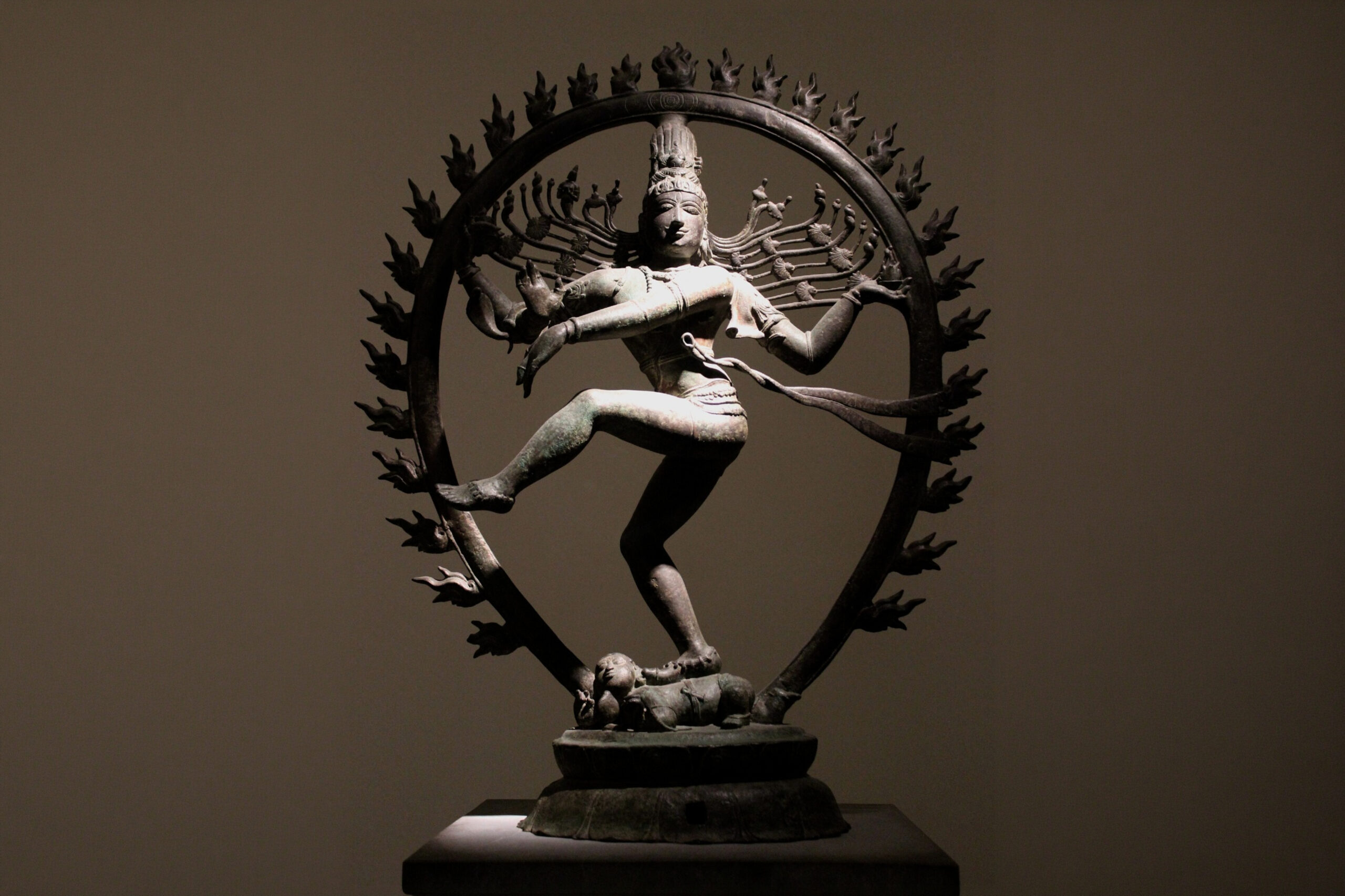
Between the 9th and 13th centuries, the Chola dynasty ruled much of southern India15. The Cholas built towering stone temples and commanded powerful naval expeditions. But perhaps more than anything, they are remembered for their bronze sculptures. These figures of gods were created for daily worship and festival processions.
Chola sculptors cast these bronzes using a pioneering lost-wax method16, beginning with a mix of resin, paraffin and beeswax. The figure was first modelled entirely by hand from this soft, pliable material. Every tilt of a wrist, the fall of a garment was meticulously finished at this stage. Nothing could be corrected later.
The wax sculpture was then packed in clay. Artisans used termite mound mud, a material that was extraordinarily fine and smooth. This was layered carefully as a thin, precise inner coat to capture every detail of the wax figure. Then outer layers mixed with river clay, sand, and charred paddy husk were applied for strength and stability.
The mold was left to dry in the sun, then fed to a fire. The process produced two contrasting effects: the clay hardened while the wax melted and trickled out of a small opening. What remained was an unremarkable clay shell, concealing within it an exquisite impression of every curve and fold of the original figure.
The same hole that had drained the wax now became an inlet. Through it, Chola artisans poured blazing, molten aimpōn—the Tamil word for a five-metal alloy of copper, gold, silver, brass and lead. Each element was added in measured proportions so the liquid could slither into the finest recesses. When the casting cooled and the clay mold was broken open, the wax figure was reborn in gleaming metal: jagged at first, then meticulously hand planed to a smooth finish.
To get here, many years would have been spent getting the proportions of the alloy right. There must have been batches that failed, countless adjustments that were made and remembered, and then passed from hand to hand across generations.
Culture works the same way. It is never perfect, especially on the first day. You keep working, you keep refining, and you reach a peak. Strangely, the very mastery that carried you there can become a reason to stop growing if left unexamined.
Centuries later, many of these figures still survive. The original, temporary wax model is gone. Its consequences are not.
Over time, the people who carve corporate culture move on. Founders get bronzed. Old ship captains disembark. But what they’ve built remains. It outlives them.
The truth is that new leaders cannot afford to sink into a chair, drag a footstool over, and prop their feet up. They must pick up the existing process and sandpaper it down repeatedly for the times they live in, for the times that keep a-changin’17.
The Separation That Kept Things Together
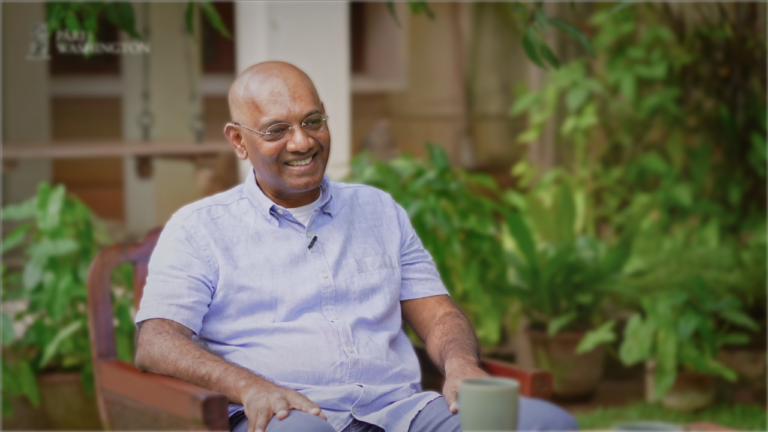
On a chilly December morning about a decade and a half ago, we headed back to Dabur to meet Pritam Das Narang. His name had surfaced multiple times in our conversations across the company. He was someone who had enabled Dabur to change from the inside, over decades.
Narang was born in the years just after India won its independence. He had cleared several grueling accounting, finance and compliance examinations to earn the coveted triple crown (C.A., C.S. and C.M.A.) and built his own practice advising companies on tax18. He joined Dabur in 1983. What Narang noticed19 was that, like many family-run businesses of that era, the lines between personal and corporate interests were not always clearly drawn. He questioned it.
He walked up to the promoters and said something uncomfortable: separate the family from the firm. It was a reckoning. Family members stepped out of operations, but they remained shareholders. They could spend their dividends however they wished, but Dabur’s capital would serve only the company.
Then came the harder question. Who would run it?
They hired a leader from outside. What followed was the kind of friction20 that makes even the most determined reformers want to tear up plans and walk away. They didn’t. The family convinced themselves that the blueprint was sound. They had probably chosen the wrong builder. They tried again. This time they looked for someone who was steeped in the company’s story.
So, the next leader, Sunil Duggal, came from within. Then came stability and growth.
What gave us the confidence to invest in Dabur wasn’t just the shift to a more professional management structure. It was studying how that transformation had, over time, become culture.
We had spent years meeting the company, scrutinizing financial statements, and visiting markets (real ones, retailing real products). We’d liked most things about Dabur excepting its stock price. So, we waited and when the price finally slipped into our range, we swooped. We began buying Dabur shares in early 2012 and kept buying until we had the position we wanted.
But that didn’t bring down the shutters on our research. If anything, owning the business puts it under a more powerful microscope.
We exited at a nice gain. In hindsight, holding longer would have compounded returns far more meaningfully.
Competition in the amla piece of the hair oil segment was heating up and growth was softening. Here, the then founder-run upstart, Marico, was nipping21 at Dabur’s much larger heels, and was competing on price. Since Dabur was a liquid stock with many buyers and sellers in the market for it, we presumed it made sense to take the profit and wait for a dip to re-enter. We sold our shares in the company. In hindsight, that was a mistake.
Our re-entry is yet to come. But the deeper problem wasn’t the timing. It was the thinking. We weren’t willing to hold onto a great and growing business at intrinsic value. Such a multi-legged business can keep chugging along, compounding its intrinsic value at attractive rates, thereby rendering its then recent stock price surge an afterthought when viewed through a long-term prism.
It’s like climbing toward a vista. You keep walking, there are dense thorny bushes, and you can’t quite see anything. Then you turn a corner at a clearing, and the view just opens. That doesn’t happen often. We found that clearing after two and a half years and then turned around without letting the view fully unfold. The vista that unfolded over the next six years would have compounded our returns far beyond what we captured.
But here is the thing. We are saying all of this out loud. We are naming our mistakes and considering what we should have done differently. That’s the culture we embrace.
Culture Is Never Abstract
Over the years, our approach to understanding corporate culture has intensified. Our research team travels widely. We spend a lot of time getting our boots on the ground, meeting participants within the ecosystem that drives a company’s business. We’re always happy to meet senior executives and factory managers. But we also go out to meet distributors that are seeing their territory shrink or that small ‘irrational’ competitor that has “nothing to lose,” 22 to hear their stories and to learn. After that, we try to be deliberate in our decision making.
We’ve learned that culture isn’t abstract. It reveals itself in small gestures. When a junior employee questions a decision using data and leadership listens, word spreads. That story becomes part of what it means to work there. That’s how culture is built.
The contrast between the Dabur of 2014 and Manpasand’s stories reinforced something important. Culture isn’t what a company says about itself. It is what it fosters, what it rewards, and what it repeats consistently, long before any of it gets mirrored in revenue and profit and cash flow.
Still, every good decision that fosters a better culture carries within it the seed of future complacency. How do you keep the restlessness alive without retreating to what’s already worked? The only defense we know is to have a culture that keeps questioning. Not just when things go wrong but every single time.